PROJECT IDENTIFICATION
Project Title:
Coruscant’s Energy-Efficient Oasis
Project Type:
Hybrid
Scale:
Neighborhood
Timeline:
Short-term (1 year)
ISO37101 mapping for ‘Community-driven energy efficiency initiative.’
Scores
| Score | Purpose | Issue | Justification |
|---|---|---|---|
| 5 | Attractiveness | Living and working environment | The project aims to enhance community engagement and improve physical and recreational benefits by promoting a culture of sustainability within an existing local asset, the swimming pool. It fosters a vibrant community spirit and encourages active participation in energy conservation, which increases the overall attractiveness of Coruscant. |
| 4 | Preservation and improvement of environment | Health and care in the community | By promoting energy efficiency and sustainable practices through community workshops and activities, the project addresses environmental health directly. The initiative encourages behaviors that contribute to both community well-being and the broader ecological impact, which aligns with the goal of enhancing environmental stewardship. |
| 5 | Social cohesion | Culture and community identity | The project integrates community values and encourages participation across different demographics, thereby enhancing social bonds and promoting a shared identity centered around sustainability. By involving residents in activities and educational programs at the pool, it reinforces community ties based on common interests. |
| 5 | Well-being | Education and capacity building | The project focuses on improving community well-being by educating residents about energy efficiency and providing opportunities for active health engagement. The incorporation of workshops and community events emphasizes knowledge-sharing and skills development, which are necessary for enhancing quality of life. |
| 4 | Resilience | Innovation, creativity and research | Through the introduction of interactive energy literacy displays and community engagement initiatives, the project demonstrates innovative methods for addressing sustainability challenges. It fosters creativity in conveying energy-saving practices while preparing the community to respond to future environmental and energy issues. |
| 4 | Responsible resource use | Economy and sustainable production and consumption | The project encourages responsible resource usage by educating participants about energy conservation and promoting sustainable practices within the community. This contributes to more informed consumption patterns, linking economic diversity and environmental awareness. |
| 3 | Attractiveness | Mobility | By creating a communal hub that operates on principles of energy efficiency and sustainability, the project could also have a positive impact on mobility by encouraging visitors to engage with the space actively. Although mobility isn’t the primary focus, it can be enhanced by increased foot traffic and community activities surrounding the pool. |
| 3 | Preservation and improvement of environment | Biodiversity and ecosystem services | While the core focus is on energy efficiency and communal engagement, the project’s sustainability goals indirectly support ecosystem services by promoting practices that can lead to broader environmental awareness and ecology-friendly behavior among residents. |
| 4 | Social cohesion | Living together, interdependence and mutuality | The initiative fosters collaboration and dialogue among community members by hosting inclusive events and engaging various stakeholders. It reinforces the idea of working together for a common goal, thus enhancing mutual support and interdependence. |
| 3 | Well-being | Safety and security | By enhancing community facilities like the swimming pool and creating a space for shared learning, the project could indirectly contribute to feelings of safety and security. It encourages community ownership over local resources, which can enhance overall perceptions of safety. |
CONTEXTUAL FOUNDATION
Specific Local Challenge Addressed:
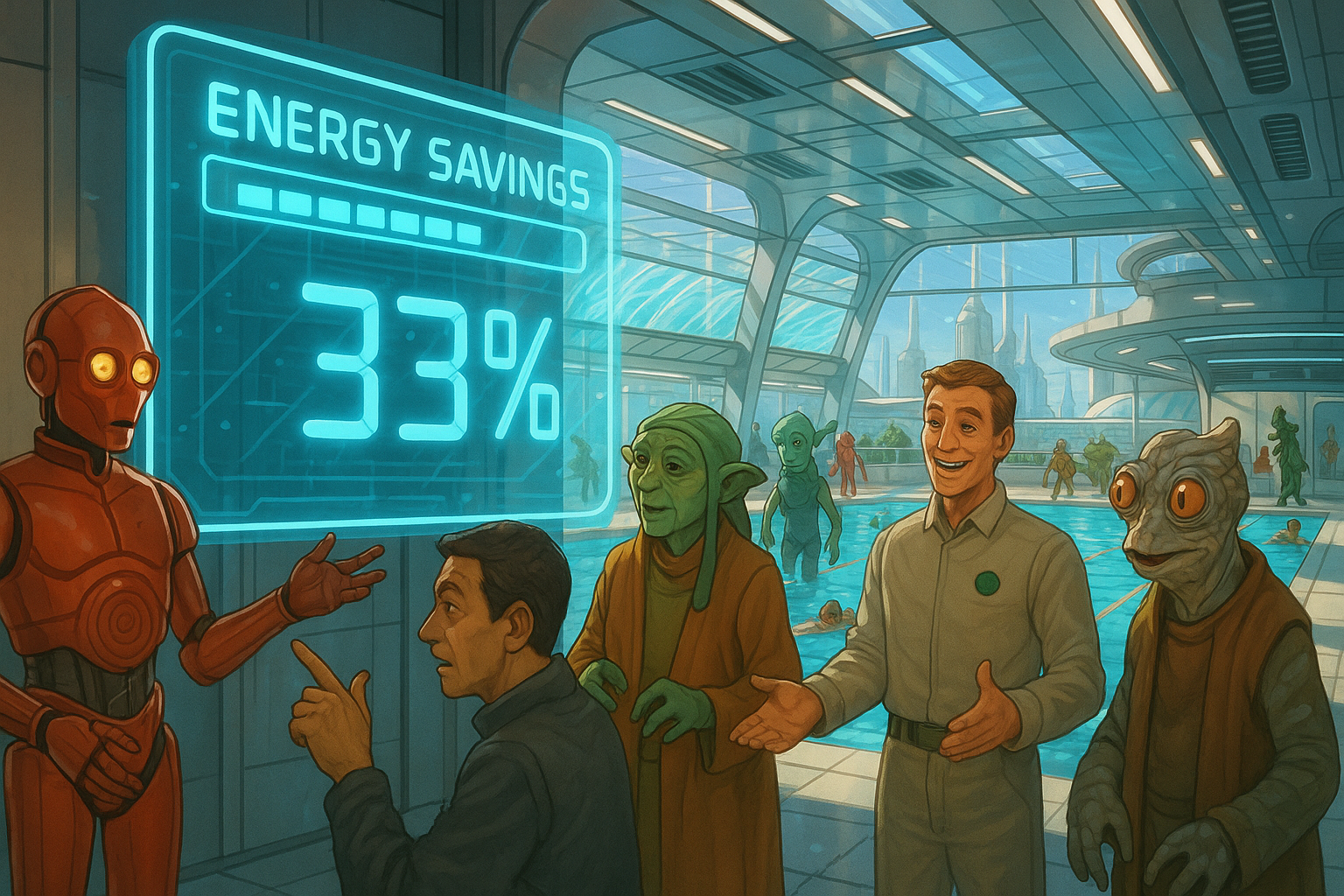
In the bustling community of Coruscant, the reopening of the municipal swimming pool after significant renovations offers a unique opportunity to tackle the pressing issue of energy inefficiency in public spaces. As highlighted in the facility’s updated systems, there is still a disconnect in awareness and engagement regarding energy conservation among residents. While the facility manager noted that visitors were surprised at their interest in energy savings, there remains a vast potential for fostering a deeper communal investment in sustainability. Hence, this project seeks to not only enhance community health through aquatic activities but also promote a culture of environmental mindfulness that can extend beyond the pool itself.
Local Assets Leveraged:
The facility itself, now equipped with upgraded heating and ventilation systems, serves as the centerpiece of this initiative, capable of demonstrating live energy savings to the community. Additionally, the existing strong community spirit and the regular patrons of the pool create a solid foundation for engagement. Residents already have an affinity for the space, which can be transformed into a hub for sustainability education and practices. By amplifying this existing interest and community connection, citizens will be more likely to embrace energy-saving practices in their daily lives.
Cultural/Social Fit:
Coruscant is characterized by an active, health-oriented population that values outdoor activities, as demonstrated by the community’s investments in the swimming pool. By situating energy efficiency as a shared community goal, this project respects local values of well-being, togetherness, and active participation in community affairs. It encourages residents of all ages to come together, sharing knowledge and experiences while promoting a vibrant, eco-conscious ethos that resonates strongly with locals.
PROJECT DESCRIPTION
Core Concept:
The “Coruscant’s Energy-Efficient Oasis” project aims to transform the newly renovated municipal swimming pool into an engaging community resource that not only provides physical and recreational benefits but also fosters a culture of sustainability. By combining active programming, educational initiatives, and community engagement, residents will be motivated to embrace energy efficiency and its many benefits.
Key Components:
-
Physical/Spatial Element: Develop an energy literacy corner in the pool lobby featuring interactive displays that allow visitors to engage with real-time data on energy consumption and savings, alongside visual interpretations of the environmental impact of their water usage.
-
Programming/Activity Element: Host a series of community workshops and classes that teach residents about energy conservation strategies, tailored specifically for families and local businesses. Events could range from “DIY Energy-Saving Techniques” to “Healthy Living in an Eco-Friendly Home,” encouraging sustainable practices both inside and outside the pool.
-
Community Engagement Element: Establish a monthly community swim night that incorporates educational components, such as guest speakers discussing local sustainability initiatives and hands-on activities demonstrating energy-saving methods. This will create space for regular residents to connect while remaining informed and engaged with environmental issues.
Implementation Approach:
-
Phase 1: Launch immediate outreach efforts to inform the community about the new energy literacy corner. Leverage local media, social platforms, and community bulletin boards to invite participation in the first community swim night, featuring interactive activities and introduce the new displays, aiming for a large turnout.
-
Phase 2: After establishing momentum, expand programming offerings by collaborating with local schools and organizations to include youth-oriented workshops. Offer incentives, such as discounted swim access for families who attend educational sessions, ensuring inclusivity and engagement from diverse groups.
-
Phase 3: Full realization of the project will involve the integration of technology, such as smartphone apps that allow community members to track their personal energy usage and savings inspired by the pool’s commitment to efficiency. This will encourage ongoing discussion and engagement around energy practices in local households.
STAKEHOLDER ECOSYSTEM
Champions:
Key advocates for this project will include the facility manager of the municipal pool, local environmental advocacy groups, and health and wellness advocates passionate about community sustainability. Their vested interest in not only improving the facility but also enhancing community engagement will propel the initiative forward.
Partners:
Essential partnerships will involve local schools for educational program support, local businesses committed to sustainability who can sponsor events or provide resources, and city officials to assist in outreach and facilitate permits for special community events.
Beneficiaries:
All community members will benefit from improved access to sustainable practices and larger participation in public spaces. Families will also have increased opportunities for engagement and education about energy efficiency, which aligns with their health and recreational interests.
Potential Opposition:
Potential resistance may arise from residents skeptical about the value of energy conservation discussions. Addressing these concerns would involve demonstrating potential financial savings and improving public health, which is reinforced through visible community feedback and positive stories ensuing from programming.
FEASIBILITY & IMPACT
Success Indicators:
- Quantitative metric: Increase in pool attendance by 20% over the year.
- Qualitative metric: Positive feedback collected through surveys centered around the community workshops and sessions to improve engagement.
- Community-defined metric: At least three energy-saving practices adopted by local households by the end of the year, assessed through follow-up surveys or reports.
Ripple Effects:
The initiative is likely to catalyze further interest in sustainability, inspiring local neighborhoods to champion eco-friendly upgrades in their homes and businesses. It could prompt partnerships for renewable energy projects or urban greening efforts, fostering a more environmentally-conscious locale.
Risk Mitigation:
The primary risk involves low participation in educational workshops. The mitigation strategy would entail conducting initial informal feedback sessions to understand local interests, ensuring that the types of programming offered align with community needs.
LOCAL ADAPTATION NOTES
What makes this project uniquely suited to this place:
The integration of sustainability awareness into an already beloved community asset, the municipal swimming pool, taps into existing community interests while addressing broader energy concerns. This locality-specific approach respects and enhances established community values around health and connection, something that may not resonate similarly in other neighborhoods.
How locals would likely describe this project in their own words:
Residents might say, “We’re bringing our community together to swim while learning how to save energy—not just saving money, but caring for our pool, our planet!” This framing emphasizes the project’s focus on shared benefits and local pride.
In conclusion, “Coruscant’s Energy-Efficient Oasis” presents a unique opportunity for urban transformation. Through the incorporation of energy awareness into community-oriented programming, it aims to elevate Coruscant’s living standards and instill a collective vision for a sustainable future while respecting the existing cultural fabric of the neighborhood.