PROJECT IDENTIFICATION
Project Title:
“Clear Minds, Fresh Air Initiative”
Project Type:
Environmental
Scale:
Neighborhood
Timeline:
Medium-term (2-3 years)
ISO37101 mapping for ‘“Air quality improvement initiative.”’
Scores
| Score | Purpose | Issue | Justification |
|---|---|---|---|
| 5 | Preservation and improvement of environment | Health and care in the community | The initiative directly addresses local air quality issues that impact community health and well-being. Installing CO₂ sensors and promoting community awareness through workshops and events aims to enhance not just the physical environment but also the health outcomes of residents. |
| 5 | Social cohesion | Education and capacity building | The initiative fosters community engagement and collective problem-solving by involving local educators and residents in workshops. This builds social ties and enhances awareness regarding air quality issues, facilitating better communication and inclusivity in tackling community challenges. |
| 4 | Well-being | Culture and community identity | The initiative emphasizes a commitment to enhancing the quality of life for residents by focusing on air quality. Engaging local culture through events that celebrate community efforts reinforces local identity while improving mental and physical well-being. |
| 4 | Resilience | Community smart infrastructures | By installing air quality monitoring stations, the initiative contributes to community resilience through enhanced awareness and responsiveness to environmental challenges. This infrastructure supports ongoing data collection and enhances the community’s capacity to adapt to health impacts from poor air quality. |
| 3 | Attractiveness | Mobility | The initiative may encourage walking and cycling paths and green spaces as ripple effects, creating a more attractive and accessible neighborhood. By fostering a sense of community ownership, it enhances the attractiveness of Shire. |
| 3 | Responsible resource use | Economy and sustainable production and consumption | The project promotes resource efficiency through community education on air quality and health, which ties into sustainable practices and local economy engagement by increasing awareness among businesses. |
| 4 | Preservation and improvement of environment | Biodiversity and ecosystem services | The initiative’s focus on improving air quality indirectly supports local biodiversity by promoting a cleaner and healthier environment, which can enhance ecosystem services within the community. |
| 3 | Attractiveness | Safety and security | Enhanced air quality contributes to a safer and healthier community environment, making Shire more appealing. Engaging community members in environmental activities may also improve the perception of safety in public spaces. |
| 5 | Well-being | Living and working environment | By addressing air quality issues, this initiative directly aims to improve the living environment for residents, contributing to their overall health, safety, and quality of life. |
| 4 | Social cohesion | Living together, interdependence and mutuality | The project encourages collaboration among community members to work towards improved air quality, fostering interdependence and a sense of mutual support that enhances social ties within Shire. |
CONTEXTUAL FOUNDATION
Specific Local Challenge Addressed:
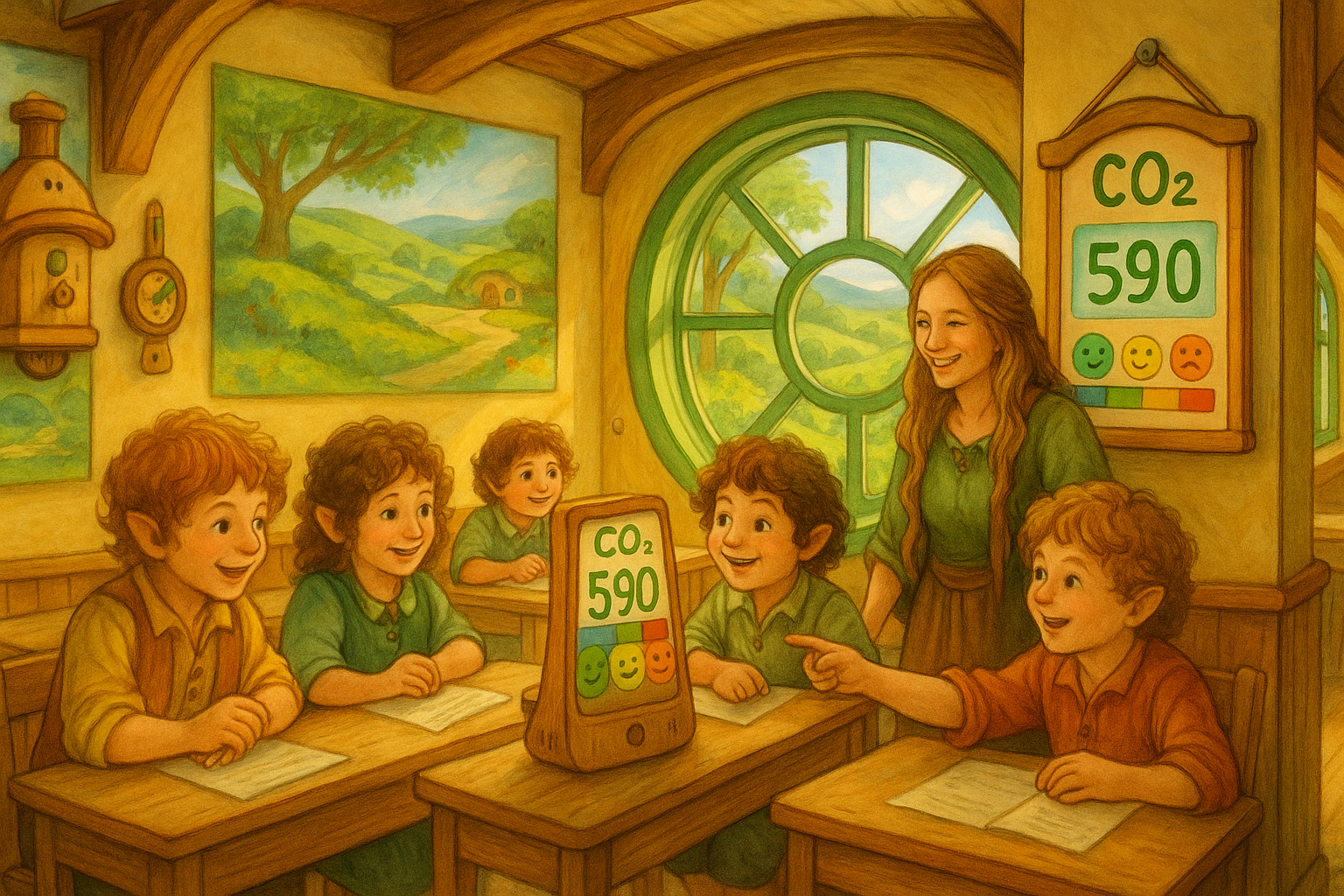
In Shire, air quality has emerged as a significant challenge in the local educational ecosystem. As noted in the description, classrooms equipped with CO₂ sensors have shown improvement in students’ alertness and concentration, reducing discomfort and tiredness during school hours. However, broader air quality concerns extend beyond the school walls, affecting the community’s health and well-being. This initiative aims to address the need for enhanced air quality monitoring not just in schools, but throughout the neighborhood, integrating practical solutions to create a healthier living and learning environment.
Local Assets Leveraged:
The existing initiative at the school with CO₂ sensors provides a strong foundation for building a community-wide model. By collaborating with local educators, health professionals, and active community groups, the initiative can harness existing networks and strengths. Furthermore, Shire benefits from engaged citizens passionate about environmental issues, creating a robust platform for advocacy and education regarding air quality.
Cultural/Social Fit:
The “Clear Minds, Fresh Air Initiative” resonates deeply with the community’s intrinsic values around education, health, and sustainability. Given Shire’s commitment to fostering well-being through effective learning environments, this project respects and enhances those local principles. The focus on communal engagement and collaborative action aligns with Shire’s tradition of collective problem-solving, ensuring that the initiative feels culturally appropriate and relevant.
PROJECT DESCRIPTION
Core Concept:
The “Clear Minds, Fresh Air Initiative” aims to expand the air quality monitoring system beyond the school environment, creating a neighborhood-wide network that promotes environmental awareness and healthy living. By combining technology with community engagement, this initiative will foster a collective commitment to improving air quality, ultimately enhancing the quality of life for all residents.
Key Components:
-
Neighborhood Air Quality Monitoring Stations: Installation of additional CO₂ and air quality sensors in strategic locations, including parks, community centers, and near heavily trafficked streets. These sensors will provide real-time data accessible via mobile apps and community kiosks.
-
Educational Workshops and Engagements: Organizing community workshops focused on air quality, its impact on health and education, and proactive measures that residents can adopt. Local students can play a pivotal role in these workshops, leading presentations based on their learning experiences from the sensors installed in their classrooms.
-
Community Events and “Air Quality Days”: Regular community events designed to build awareness around air quality issues. These days can feature local artists and musicians, fostering a sense of communal ownership while celebrating the neighborhood’s commitment to solving air pollution problems.
Implementation Approach:
-
Phase 1: Immediate actions would include the installation of monitoring stations and launching an awareness campaign. Collaboration with local schools will kickstart the educational workshops.
-
Phase 2: Building momentum through pop-up events in parks and plazas featuring activities focused on understanding air quality data and its implications on health, promoting interactive learning methods.
-
Phase 3: Full realization of the initiative by incorporating feedback from the community and adjusting the project based on their needs. The eventual goal would be to integrate findings with local policy-making for sustainable environmental practices.
STAKEHOLDER ECOSYSTEM
Champions:
Local educators, including teacher Liga Ozola, can serve as advocates for implementing this initiative, harnessing their classroom experiences to inspire broader community action.
Partners:
Collaboration with local health organizations, the municipal government, environmental NGOs, and universities will be vital for providing expertise, funding, and technical support for the initiative.
Beneficiaries:
All residents, especially schoolchildren and their families, stand to benefit through enhanced air quality, leading to improved health outcomes and learning experiences. Additionally, local businesses may observe increased community engagement and support driven by heightened awareness of local issues.
Potential Opposition:
Some community members may resist changes or feel skeptical about the utility of installing air quality sensors. Addressing these concerns through transparent communication and showcasing data from existing initiatives can build trust and garner support.
FEASIBILITY & IMPACT
Success Indicators:
- Quantitative metric: Reduction in average indoor CO₂ levels reported in participating schools and community centers by at least 20% within the first two years.
- Qualitative metric: Increased student and community satisfaction scores regarding health and comfort levels, measured through surveys.
- Community-defined metric: The number of active participants in workshops and events aimed at improving air quality.
Ripple Effects:
This initiative may catalyze further environmental improvements, such as increased green spaces, community gardens, and walking and cycling paths, contributing to a healthier overall environment.
Risk Mitigation:
Primary risks include potential technological failures or lack of community engagement. To mitigate these, ongoing maintenance of sensors and regular communication with participants about the project’s progress and successes will be crucial.
LOCAL ADAPTATION NOTES
What makes this project uniquely suited to this place:
The combination of Shire’s existing educational initiatives, community interest in health, and environmental possibilities create a unique context where such a project can thrive. The initiative builds on a shared understanding of the importance of air quality, making it particularly relevant to the daily lives of its residents.
How locals would likely describe this project in their own words:
Residents of Shire might say, “Finally, a project that gets what our kids need for better health and learning, while also helping us all understand what’s happening around us. Fresh air for our minds and our community—this feels like a step in the right direction!”